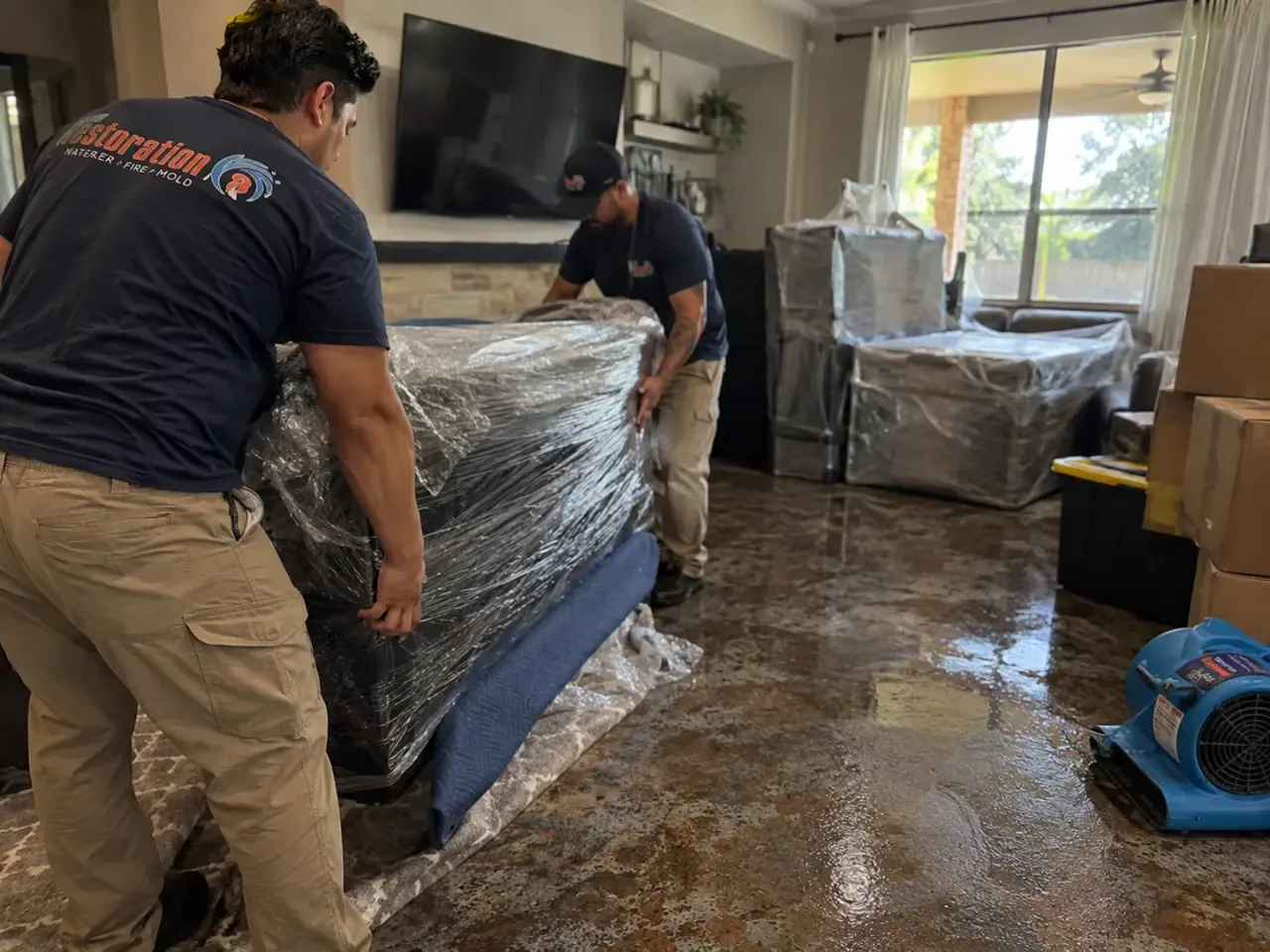
Stop standing water before boards swell and buckle
Hardwood Floor Water Extraction in Denver
Hardwood Floor Water Extraction in Denver helps homeowners and property managers remove water before boards cup, seams swell, or moisture reaches the subfloor. We respond to burst pipes, appliance leaks, and flooded rooms with extraction equipment and targeted drying. If water is spreading across your hardwood flooring, call Denver Water Defense at (720) 844-2918 so we can assess the floor and begin cleanup.
Live dispatcherUpfront optionsBacked workmanship
What's included
What's Included in Hardwood Floor Cleanup
Our service covers inspection, standing-water removal, moisture mapping, and a drying setup matched to your floor. Follow-up checks track whether the boards and accessible subfloor are drying. If water has contaminated porous materials, or if flooring must be removed to reach trapped moisture, we explain the additional work before proceeding. The aim is to address the actual water path, not just the visible puddle.
Water Source Assessment
We identify whether the water came from a supply line, appliance, storm entry, or backup and check that active flow has stopped. The source matters: clean water and contaminated water call for different handling. We also map the visible spread so your extraction plan accounts for adjoining rooms and floor transitions.
Hardwood Surface Extraction
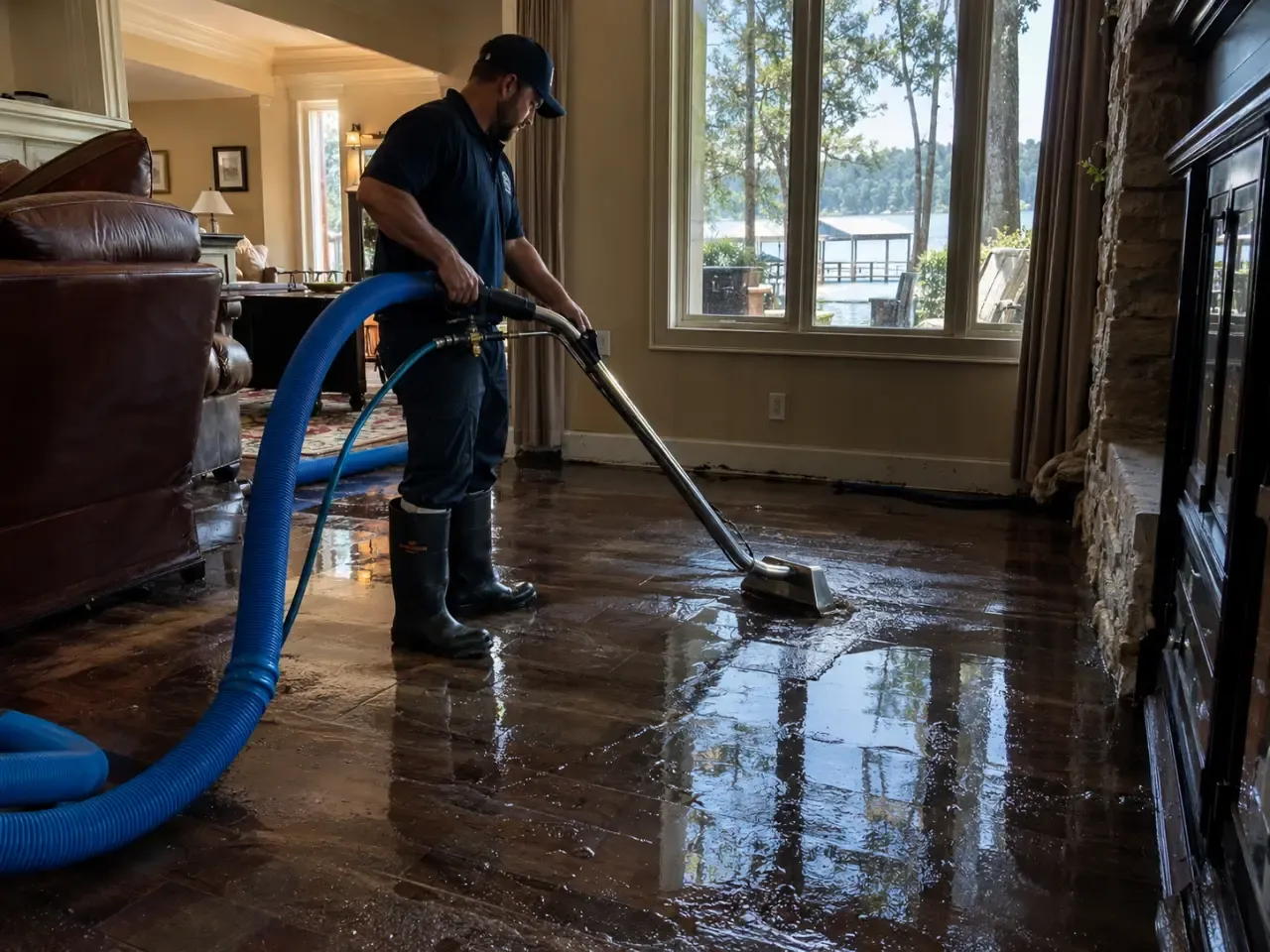
We remove standing water from the wood surface with equipment selected for the depth and room access. A wet/dry vacuum or portable extraction unit handles contained areas; deeper water may require a pump before detailed extraction. We protect nearby finishes and avoid treating the floor with unnecessary water.
Moisture Mapping
A technician records moisture readings on affected boards and compares them with unaffected areas. We check accessible edges and subflooring where construction allows, then use those readings to guide equipment placement. You can see which locations need attention and how later checks compare with the initial condition.
Drying Equipment Setup
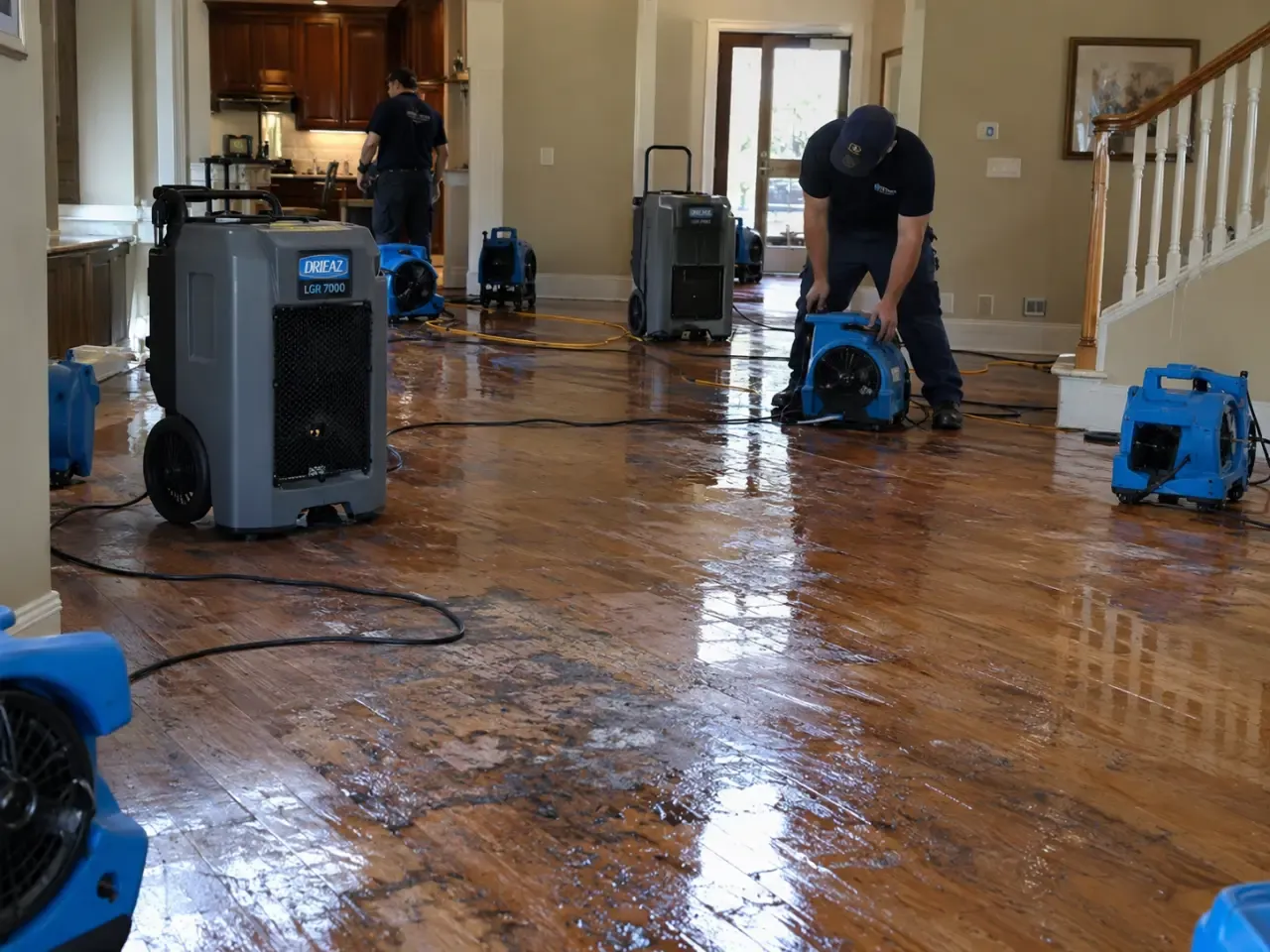
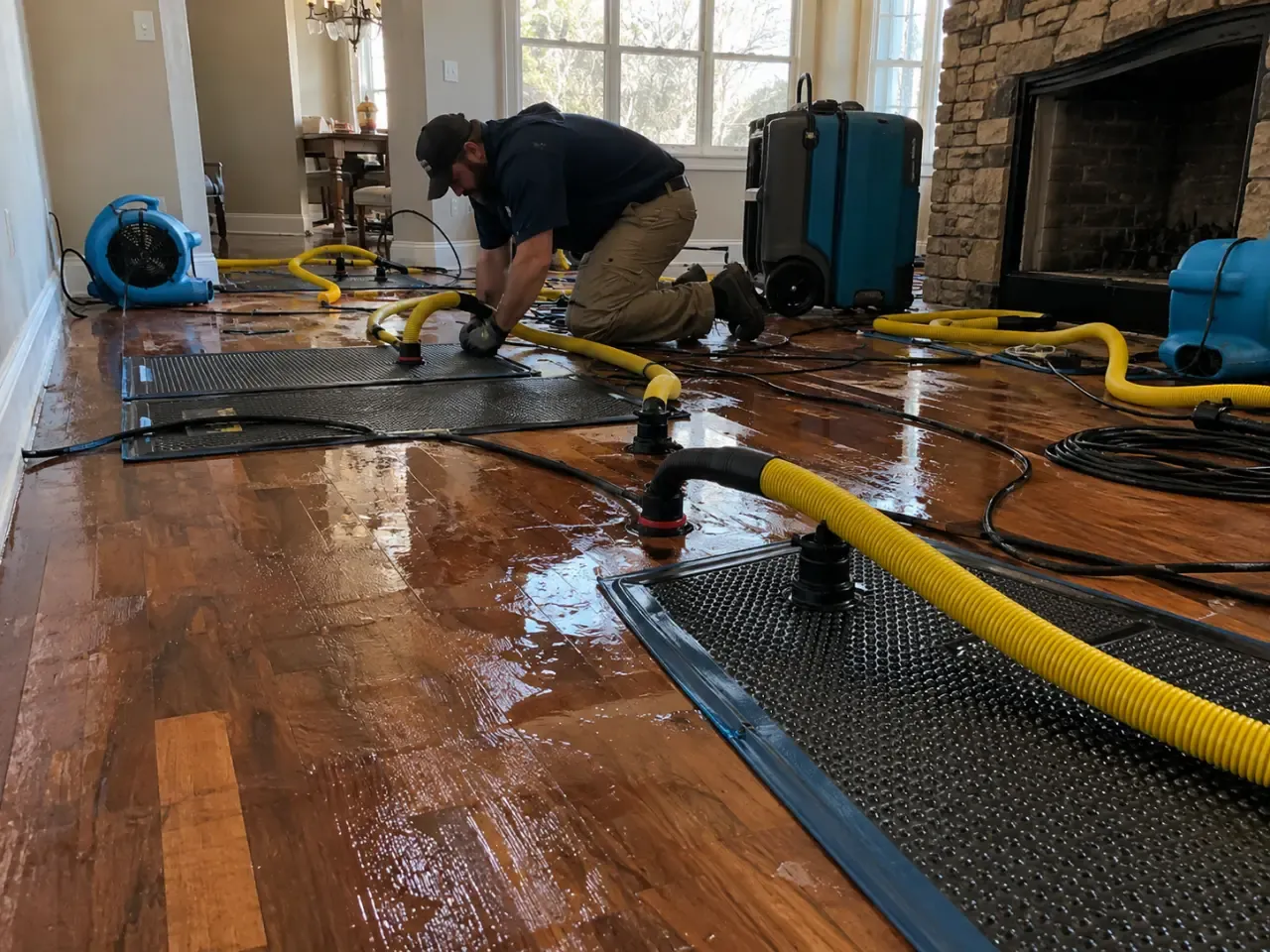
We position air movers and a commercial dehumidifier to support controlled drying throughout the affected space. Equipment is arranged to reduce uneven drying and keep access routes usable where possible. We explain basic operating precautions and the reason each unit is placed in that location.
Follow-Up Verification
We return to check readings and make adjustments based on measured progress, not a preset number of hours. Many jobs need three to five days of drying, with duration shaped by water volume and floor construction. If hidden moisture persists, we discuss a targeted method before changing the setup.
Service overview
Hardwood Floor Water Extraction in Denver
Hardwood Floor Water Extraction in Denver is a water damage cleanup service that removes standing water from wood flooring and starts controlled drying before moisture causes greater damage. We inspect the affected rooms, identify the water source, extract surface water, and check moisture in the boards and subflooring. Wood absorbs water through seams and unfinished edges, so a dry-looking surface does not prove the assembly is dry. Our crew documents readings and adjusts airflow to limit cupping, swelling, and unnecessary removal of flooring.
Denver homes face sudden floor wetting from burst pipe water damage, frozen pipe leaks, washing machine overflows, and basement flooding. Winter freezes can turn a small supply-line leak into water across several rooms; spring storms can push water into lower levels. We use Denver hardwood floor water extraction methods suited to the affected floor and water source, then track drying with repeat readings. For a leak after hours, 24/7 hardwood floor water extraction in Denver CO gets the initial water removed before it migrates farther.
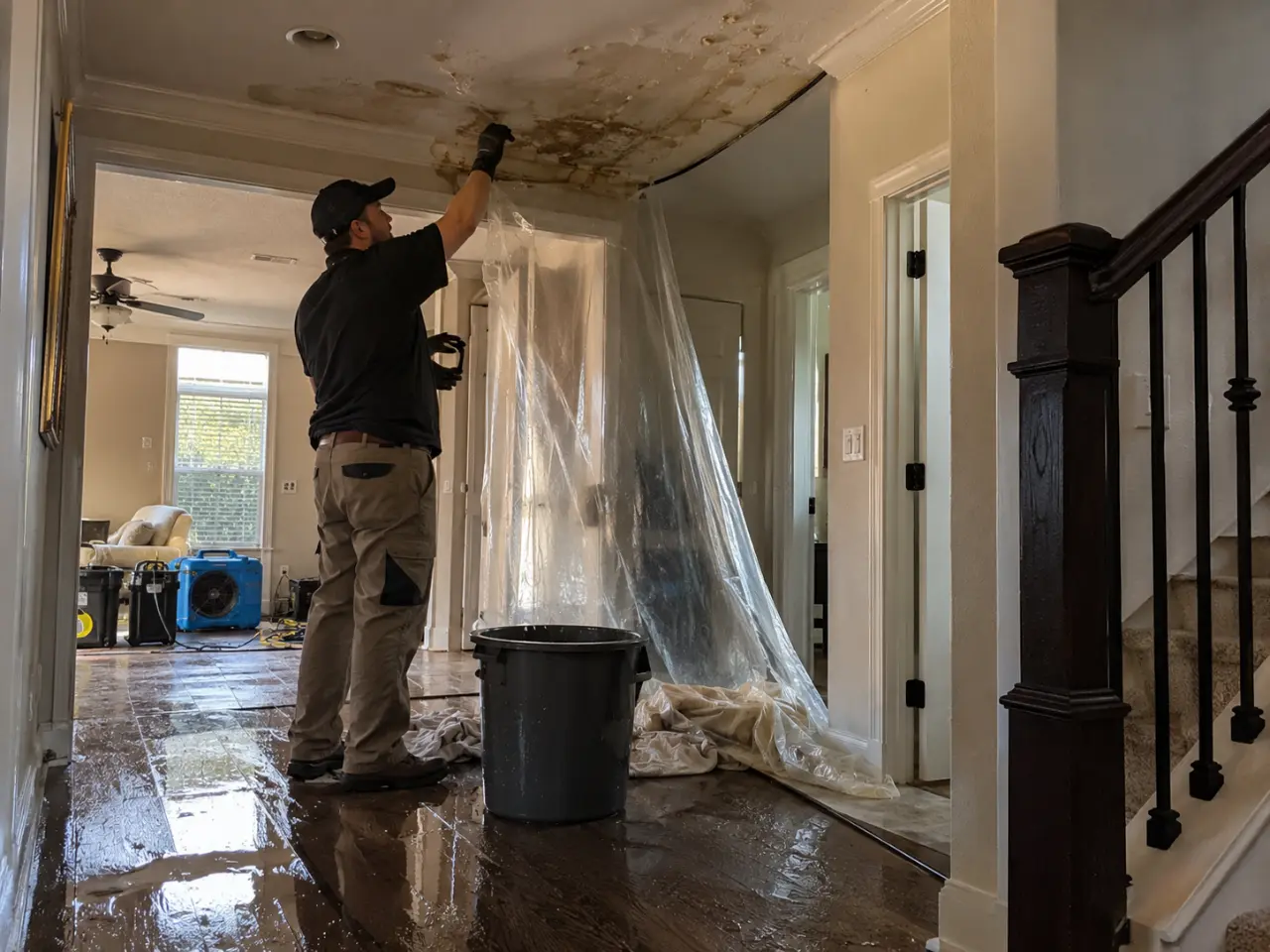
How we workWe verify the cause, compare realistic options, and confirm the repair before we leave.
The service timeline
What to Expect During Service
The process flexes to the condition, but these checkpoints keep decisions clear.
Stop the Source
We begin by locating the active water source and helping you isolate it, whether it is a supply line, appliance, or incoming surface water. If the water involves a sewage backup, we identify that immediately because contaminated water requires different handling. This first step often takes 15 to 30 minutes, depending on access and whether the leak has already been stopped.
Map Wet Materials
Our technician checks the hardwood flooring, nearby carpet, baseboards, and accessible subflooring. A moisture meter records readings at multiple points, while a thermal imaging camera can help locate temperature patterns that warrant closer inspection. We mark the affected boundary and note existing floor conditions, so later readings show whether drying is progressing.
Extract Standing Water
We remove pooled water with a wet/dry vacuum, portable extraction unit, or submersible pump when water depth calls for it. On a larger loss, a truck-mounted water extractor may support rapid removal from connected areas. Extraction commonly takes one to three hours for a contained room; access, water volume, and floor construction change the pace.
Set Controlled Drying
After extraction, we place air movers and a commercial dehumidifier to move moisture out of the room and wood assembly. Equipment placement matters: excessive direct airflow can dry one section faster than another. We explain the setup, protect walkways, and record the starting readings so you know what the equipment is meant to accomplish.
Check and Adjust
We return for moisture checks, compare readings with the initial map, and adjust equipment as the floor dries. Many drying jobs require several days, with readings checked at least once daily when equipment is operating. If the floor remains wet below the boards, we discuss suitable next steps, including targeted access or an injection drying system.
Tools & methods
Extraction Tools and Drying Methods
Purpose-built equipment, used by trained technicians, so the job is done accurately the first time.
Portable extraction unit
We use a portable extraction unit for controlled removal in rooms where access is limited or water is concentrated on hardwood. Its compact setup helps us work around cabinets and furniture while collecting surface water.
Truck-mounted water extractor
For larger losses and connected areas, a truck-mounted water extractor can remove substantial water efficiently. We choose it when the volume and access make it appropriate, then check seams and edges for remaining moisture.
Moisture meter
A moisture meter gives repeatable readings from affected boards and comparison points. We use the measurements to map the wet boundary, monitor drying, and decide whether air movement or a more targeted approach is needed.
Air mover and dehumidifier
Air movers circulate air across the drying area while a commercial dehumidifier removes moisture from the room. We place and adjust this equipment to support even drying rather than aiming high airflow at one board.
Injection drying system
When readings indicate moisture trapped below a floor surface, an injection drying system may deliver controlled airflow to a concealed area. We consider it after inspection and use readings to decide whether the method is appropriate.
Use cases
When to Call for Floor Extraction
These examples show how the service framework adapts rather than forcing every call through one repair.
Pipe Leak in a Park Hill Dining Room
A supply line under a sink leaked while the household was away. Water spread beneath a table and along the cabinet toe-kick, leaving several boards raised at the edges. The visible area was about 120 square feet, but moisture readings showed that the wet boundary extended beyond the most obvious discoloration. → Our crew removed standing water, mapped the floor, and dried the affected room with monitored equipment. Over five days, repeat checks showed moisture trending down at the cabinet edge and room perimeter. The homeowner received readings at each visit and a clear explanation of the remaining dry-down steps.
Basement Water at Floor Transitions
After water entered a finished basement, a small hardwood area sat beside saturated carpet and damp drywall. The floor surface had been wiped, but carpet padding still held water at the transition. Without coordinated extraction, the wood edge and nearby wall could have remained wet after the room looked clean. → We extracted water from the hardwood and adjoining carpet, checked accessible wall and floor edges, and set drying equipment for the connected materials. Readings were checked daily for four days. The visible water was gone, the carpet edge dried, and the owner had a measured status for each affected section.
Problems we solve
How to Dry Flooded Hardwood Floors in Denver CO
A wet floor can look manageable while water remains under boards, behind trim, or in the subfloor. We use extraction and repeat moisture checks to address the hidden part of the problem. Early action helps limit swelling and gives your hardwood a better chance of drying without unnecessary removal.
Hardwood boards begin cupping after a pipe leak
We stop active water, extract what remains on the surface, and map readings across cupped and unaffected boards. Our team checks the room edges and accessible subfloor, then uses controlled airflow and dehumidification. Follow-up readings show whether moisture is dropping evenly or a deeper drying method is needed.
Water disappears from view but remains beneath floorboards
We compare moisture meter readings across the flooring and inspect adjoining materials for signs of migration. If accessible readings remain high, we adjust airflow or discuss targeted access and an injection drying system. You receive an explanation of where moisture remains and what the next measurement should show.
Carpet saturation spreads into a hardwood transition
We extract water from connected surfaces and check the carpet edge, padding, and hardwood transition. Our technician records readings on both materials and sets drying equipment to address the boundary. This coordinated approach helps prevent one dry surface from hiding moisture in the neighboring floor assembly.
A basement flood leaves wood flooring and walls damp
We remove standing water first, then inspect the floor and wall perimeter for moisture movement. Our crew documents affected materials and uses dehumidification and air movement to dry the space. If wet drywall or insulation blocks access to the source of moisture, we explain the required next step.
Pricing process
Hardwood Floor Extraction Pricing
$250-$900 for many contained rooms; $900-$3,500 or more for larger or complex losses
Affected floor area
A contained 100-square-foot room usually requires less extraction and equipment time than several connected rooms. We measure the affected boundary, not just the visible puddle, because water can travel beneath furniture and across thresholds before it is noticed.
Water volume and source
A shallow clean-water spill costs less to handle than deep flooding or a sewage backup. Contaminated water requires additional handling and disinfection steps, while a pump may be needed before detailed extraction when standing water is deep.
Floor and subfloor access
Open room edges and accessible floor assemblies make inspection and drying more direct. Tight cabinet areas, concealed cavities, or moisture trapped below finished hardwood can require additional labor, targeted access, or an injection drying system.
How quickly should water be extracted from hardwood floors in Denver?
Extract standing water as soon as it is safe, ideally within the first few hours. Wood absorbs moisture through seams and edges, and longer exposure raises the risk of swelling and cupping. First, stop the leak if you can do so safely, move people away from electrical hazards, and call for professional water cleanup for wood flooring Denver. We remove surface water, check the floor assembly, and start controlled drying.
Can water-damaged hardwood floors be saved in Denver CO?
Yes, some water-damaged hardwood floors can be dried in place, especially when extraction starts promptly and readings show manageable moisture. The outcome depends on water type, exposure time, wood construction, finish, and subfloor condition. We inspect for cupping, loose boards, and elevated moisture before recommending the next step. Hardwood floor water damage restoration Denver, Colorado begins with extraction and measurement; replacement is considered only when the floor cannot be dried or has sustained significant damage.
What does hardwood floor water removal cost in Denver?
A contained hardwood extraction job often costs about $250 to $900, while larger losses involving multiple rooms or structural drying can range from $900 to $3,500 or more. Typical 2026 pricing in this area depends on water volume, affected square footage, contamination, equipment days, and access. We explain pricing upfront before work proceeds. Call (720) 844-2918 with the room count and water source for a practical starting point.
Does wood floor water extraction include drying and moisture checks?
Yes, a complete service includes water removal, equipment setup, and follow-up moisture checks to track drying. Extraction removes liquid water; air movers and a commercial dehumidifier address remaining moisture in the room and floor assembly. Our technician records readings during the visit and compares them at follow-up, often over three to five days. If the subfloor stays wet, we adjust the plan and explain options such as targeted access or an injection drying system.
Related services
More Water Damage Cleanup Services
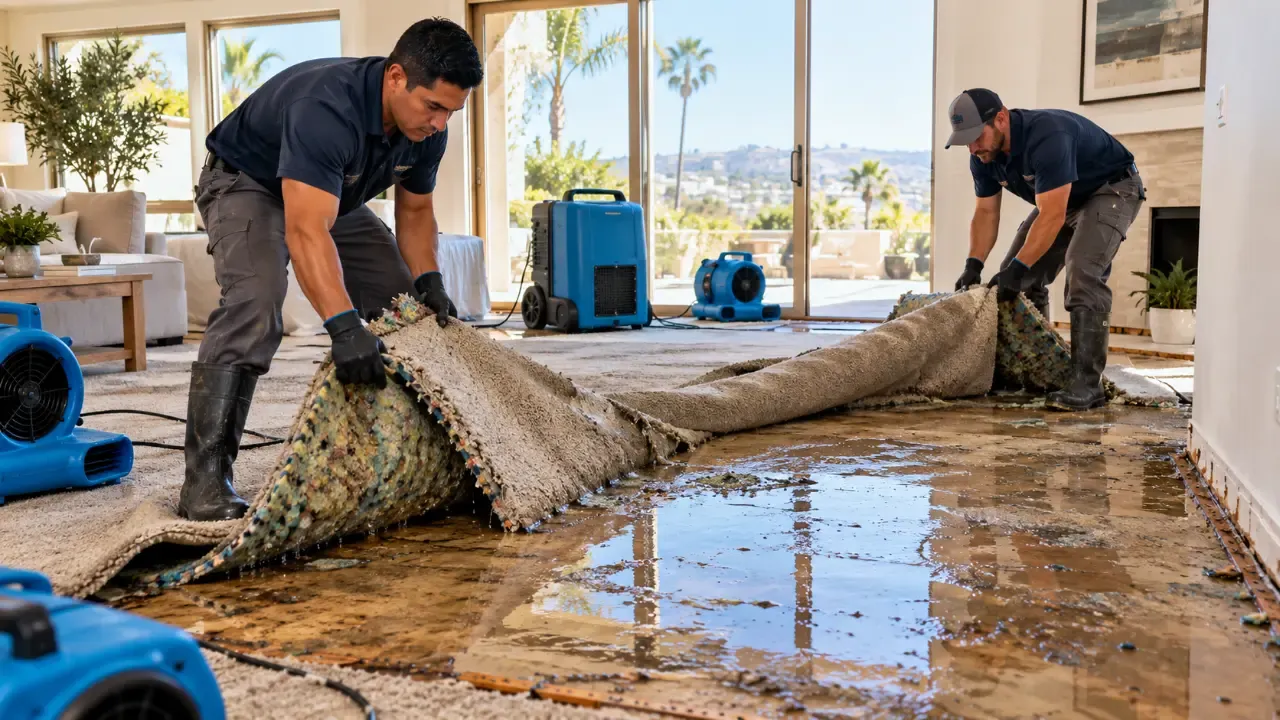
Flood Water Extraction & Cleanup
When stormwater or a major leak covers hardwood and surrounding surfaces, we remove water across the affected rooms and identify where it traveled. Coordinated cleanup helps prevent a wet carpet edge or wall cavity from being overlooked while we dry your wood flooring.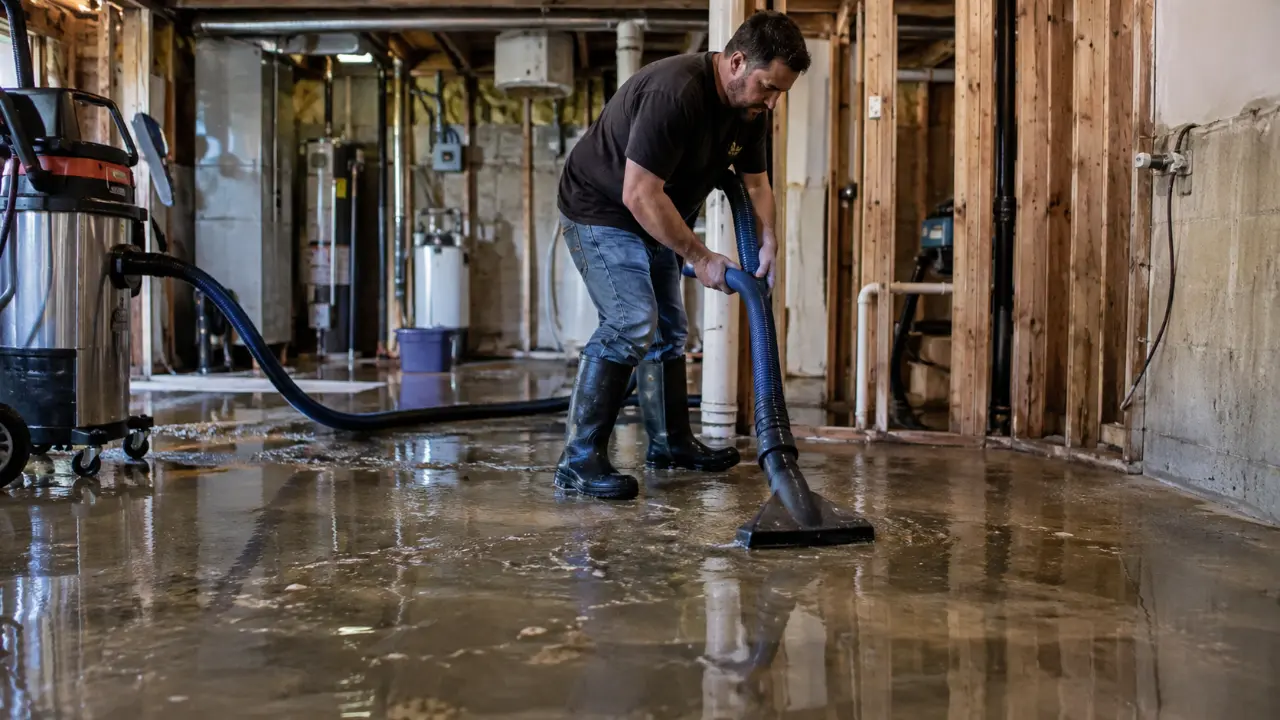
Basement Water Removal
Basement flooding can leave hardwood, carpet padding, and stored belongings wet at the same time. We pump deeper standing water first, then extract from flooring and assess nearby walls and subflooring. That sequence helps establish a clear drying plan for the lower level.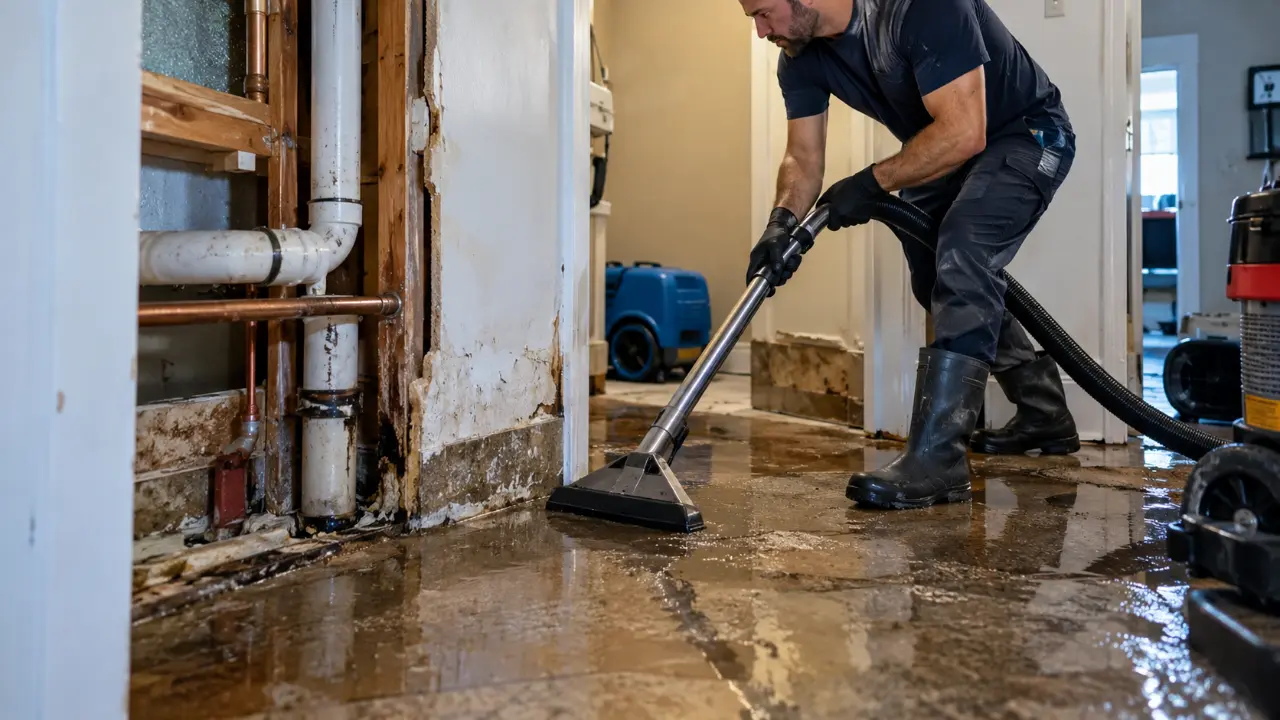
Sewage Backup Cleanup
Sewage-contaminated water requires controlled removal and appropriate disinfection, not routine clean-water extraction. We isolate affected materials, remove contaminated water, and follow product-label directions for antimicrobial disinfectant. Hardwood exposed to sewage receives a careful condition assessment because porous seams can retain contamination.Ready when you are
Call for Hardwood Floor Water Extraction in Denver
Standing water can move beneath boards before the surface looks badly damaged. Call Denver Water Defense at (720) 844-2918 for emergency cleanup and a moisture-based drying plan. Our IICRC Water Damage Restoration Technician training informs how we assess and document your loss.
Talk with the local team
Request Hardwood Floor Water Extraction
If water is pooling in your home or business, call Denver Water Defense at (720) 844-2918. We take emergency calls 24/7 and respond to water extraction needs across Denver, CO. Tell us where the water started, which rooms are affected, and whether power or sewage is involved so our team can help you prioritize the next step.